How to Send Photos to Someone in the Future (2026)
Scheduling photos to arrive years from now is not a storage problem, it is a survival problem: the thing holding them has to still be running on the delivery date, and the recipient has to be able to open it without an account they no longer have. Email schedulers cap out around a year and break when the address dies. FutureMe sends text, and images only on Premium. A Viallo time capsule takes photos now, delivers them on a date you pick, and the person receiving it opens a link with no account and no app. The limits are real and worth knowing up front: one capsule per 30 days on Free, and sending without your name attached needs a paid plan.
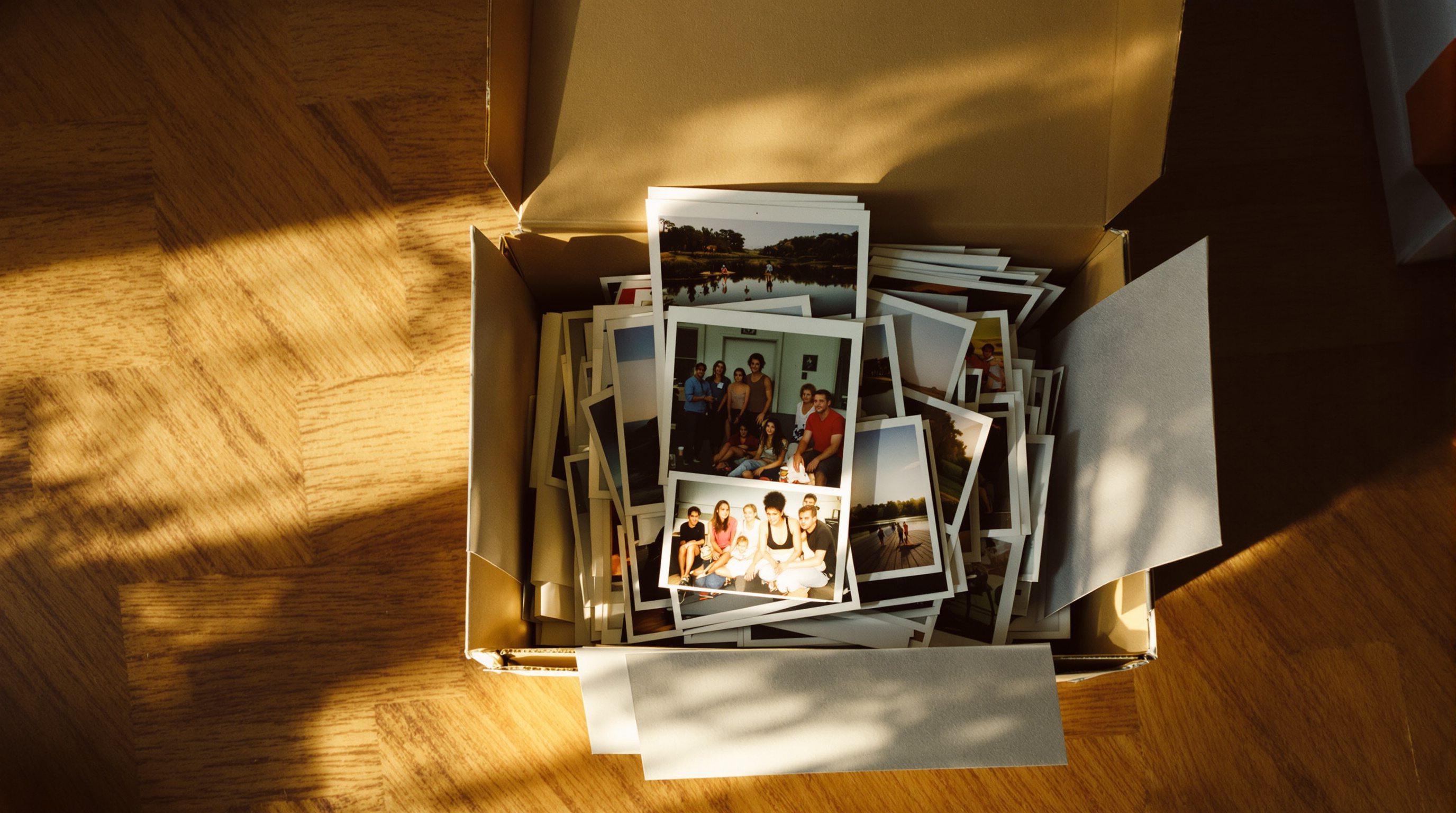
What Actually Delivers Photos on a Future Date
Very little, and that is the whole difficulty. Most tools people reach for were built for something else and bend awkwardly into the job.
Gmail's scheduled send puts the photos in an attachment, which means compression and a size ceiling. FutureMe, the best known letter to your future self service, is built around text. Cloud storage with a shared link solves nothing on its own, because a link is live the moment you make it - there is no date on which it starts existing. And every one of these fails the same way if the recipient's address changes, which over ten years it usually does.
A purpose built time capsule is the narrow category that does the job directly: you upload photos, you pick a date, and the thing sits sealed until then.
The Hard Part Is Not Storage, It Is the Gap
Anyone can hold a file for a decade. The difficulty is everything that happens in the gap between sealing and delivery, and it is worth being blunt about it before you trust anything with a memory you cannot recreate.
- The company has to still exist. A fifteen year capsule is a bet on a business surviving fifteen years. No feature list changes that, and any service that does not acknowledge it is selling you a feeling.
- The email address will probably change. Work addresses die with jobs, university addresses expire, providers shut down. A capsule that can only be delivered to one address set a decade ago is fragile by design.
- The recipient may not have an account. If opening the capsule requires signing up for something, a meaningful share of recipients simply will not - especially the older relatives these are most often sent to.
- You might change your mind. Relationships end, plans change. A capsule you cannot cancel is a liability, not a gift.
Those four questions are a better shortlist than any feature comparison. Ask them of whatever you use, including this one.
The Four Occasions People Actually Use This For
The pattern is consistent: someone wants a specific person to see specific photos at a moment that has not arrived yet.
| Occasion | Typical gap | What makes it awkward |
|---|---|---|
| A baby's first year, opened at 18 | 18 years | Longest gap, and the recipient has no email address yet |
| Graduation or retirement | 1 to 5 years | Date is known but may move |
| An anniversary gift | 1 year | Should arrive without you having to remember |
| A message to someone who will not hear it now | Varies | Sender often wants to stay unnamed |
The first one is the hardest and the most common. An eighteen year gap means the address you send to is almost certainly a parent's, not the child's, which is fine as long as the capsule does not silently fail when that address stops working.

How a Viallo Time Capsule Works, With the Limits
You upload photos, set a delivery date and an email address, and seal it. On the date, the recipient gets a link. Opening it needs no account and no app, which is the same thing that makes contribute links work for guests who will never sign up for anything.
Three things about it are worth stating plainly, because they are limits.
- How many you can send is tied to your plan. Without an account you get one capsule, ever. On Free it is one every 30 days, on Plus one a week, on Pro one a day. This is a keepsake tool, not a bulk sender.
- Sending without your name attached needs a paid plan. If you have no account or you are on Free, your identity is attached to the capsule and the recipient will see who sent it. Only Plus and Pro can send unnamed.
- You can cancel before it lands. A sealed capsule can be revoked any time before delivery. After it has been delivered, it has been delivered.
Photos keep their original resolution rather than being recompressed, which matters more over long gaps than it does over short ones - a photo that has been through two rounds of messaging app compression is not the photo you took. That is the same reason sending them through WhatsApp is a poor way to preserve anything.
On Sending One Anonymously
This comes up more than you would expect, and the honest answer has a condition attached. A capsule can arrive without your name on it, but only from a Plus or Pro account. An anonymous sender with no account, or a sender on the Free plan, has their identity revealed to the recipient - the setting is overridden rather than quietly ignored, and that is deliberate. Untraceable delivery of images to a stranger is a feature with obvious misuse, and gating it behind an identified, paying account is the guardrail.
If what you want is genuinely anonymous, one way delivery to someone who cannot find out who you are, no reputable service will give you that, and you should treat any that offers it with suspicion about what else it tolerates.
What to Check Before You Seal Anything
Whatever you use, the same five checks apply. They take five minutes and they are the difference between a capsule that arrives and one that quietly does not.
- Does the recipient need an account to open it? If yes, add a decade and ask whether they will still bother.
- What happens if the delivery email bounces? There should be a retry, and you should hear about a permanent failure rather than assume success.
- How long is it kept? A Viallo capsule is retained for 50 years by default. Any service without a stated retention period has not thought about this.
- Can you cancel it? Before delivery, you should be able to.
- Do the photos keep their resolution? Check before sealing, not after opening.
When a Time Capsule Is the Wrong Tool
If the gap is short and the recipient is reachable now, a shared album is better: they can see the photos immediately, come back to them, and you can add more later. A capsule is a one time delivery on one date, which is exactly what you want for a milestone and exactly what you do not want for an ongoing collection. For a trip that just ended or a family album that keeps growing, a shared album does the job better.
And if the photos need to reach someone this week, none of this applies. Use a link and send it.
Frequently Asked Questions
Does the recipient need an account to open a time capsule?
No. The capsule arrives as a link and opens in a browser with no account and no app install. This matters more than it sounds over a long gap, because the alternative is asking someone to sign up for a service years after you decided they should.
How far in the future can a capsule be delivered?
You pick the date, and capsules are retained for 50 years by default, so an eighteen year gap for a child to open as an adult is within normal use. The honest caveat is that any multi decade promise depends on the service still existing, which is true of every provider in this category.
Can I send a time capsule anonymously?
Only on a Plus or Pro plan. Anonymous senders without an account and senders on the Free plan have their identity shown to the recipient, even if they ask for it to be hidden. The restriction is intentional: unnamed image delivery to strangers is easy to misuse.
How many time capsules can I send?
One in total without an account, one every 30 days on Free, one a week on Plus and one a day on Pro. The limits are deliberate - this is built for keepsakes rather than volume sending.
Can I cancel a capsule after sealing it?
Yes, any time before the delivery date. A sealed capsule can be revoked, and revoking it means it will not be delivered. Once it has been delivered it cannot be recalled, which is the same as any email.