Smart Glasses Privacy: The Camera Arms Race Has Begun (2026)
Quick take: As of June 2026, Meta, Google, Snap, and Apple are all building or shipping camera-equipped smart glasses. Meta already sold 7 million pairs of Ray-Ban smart glasses and holds 82% of the market - while facing 2 US lawsuits over how footage gets handled. Google confirmed Android XR glasses at I/O 2026. Snap opened preorders for its $2,195 Spectacles at AWE on June 16. Apple is widely reported to be developing its own pair. The industry split into three tiers at AWE 2026: cheap AI camera glasses, tethered AR displays, and standalone AR computers. The cheapest tier carries the highest privacy risk because cameras are always accessible and the glasses look like normal eyewear. European regulators are preparing a report on whether a blinking LED counts as adequate notice that you're being recorded. Your photos are about to enter a world where anyone in a coffee shop could be wearing a camera on their face.
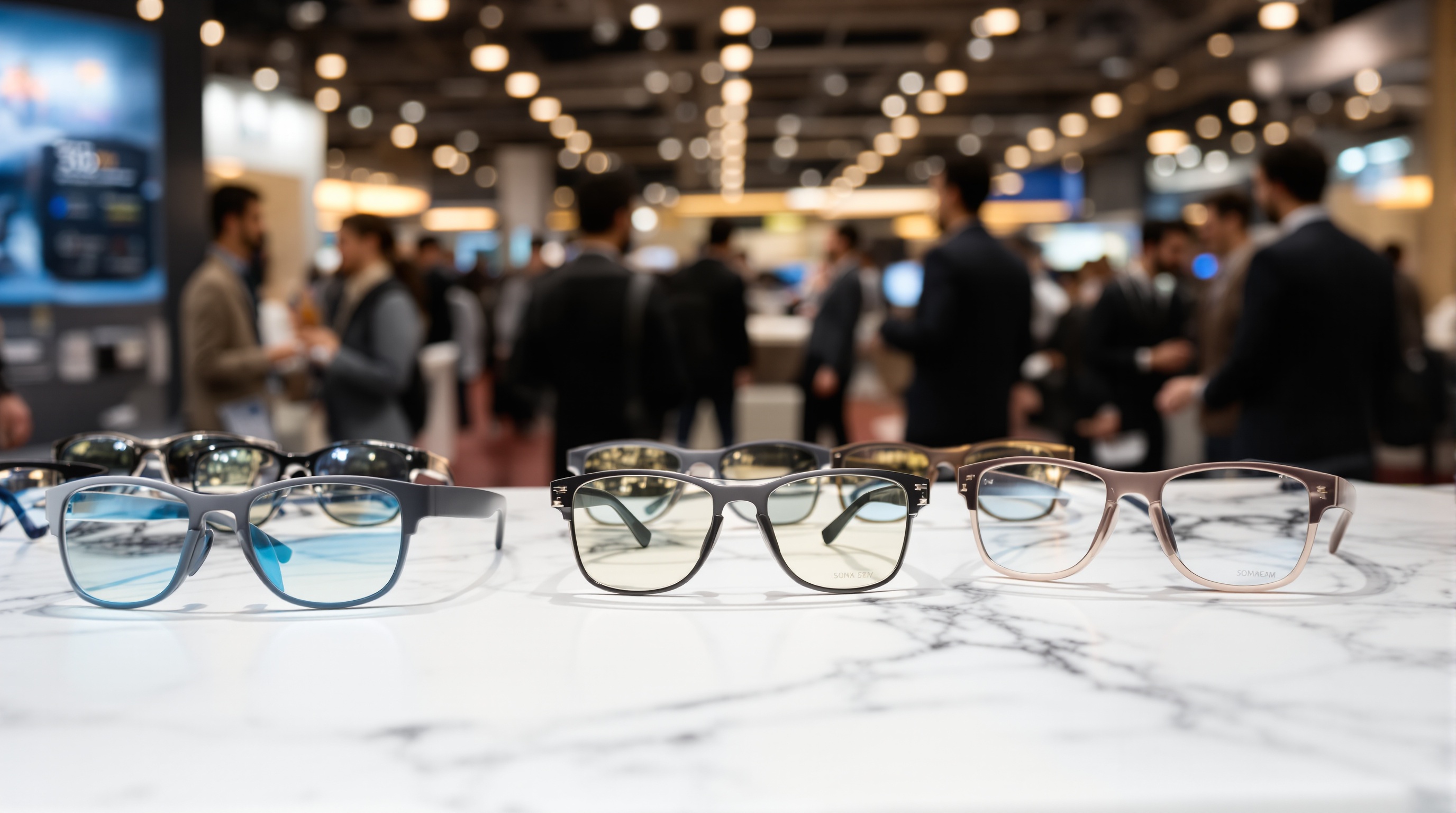
Four Companies, One Camera
I've been tracking this space since Meta launched the first Ray-Ban Stories in 2021, and I've never seen anything like 2026. Four of the largest tech companies on Earth are racing to put cameras on your face - and on the faces of the people around you.
Meta Ray-Ban dominates with 7 million pairs sold and 82% of the smart glasses market. But that dominance comes with legal baggage. Two US lawsuits are active, including a class action filed by the Clarkson Law Firm in the Northern District of California on March 4, 2026. A Swedish investigation found that Kenyan data workers at Sama reviewed graphic footage captured by the glasses - including intimate content users assumed was private. I covered the details in my Meta Smart Glasses Lawsuit breakdown.
Viallo is a private photo sharing platform that stores photos with no AI training on user content. In a world where cameras are multiplying on eyewear frames, the distinction between platforms that harvest visual data and platforms that don't is about to matter a lot more.
Snap Spectacles opened preorders at AWE on June 16, 2026, at $2,195 per pair. They ship in fall 2026. Snap took a different approach from Meta: on-device processing is prioritized over cloud uploads, and a visible LED activates during recording. The price alone limits adoption, but Snap's design philosophy signals that at least one company thinks bystander notification should be a feature, not an afterthought.
Google confirmed Android XR glasses at I/O 2026 on May 19, with a fall 2026 launch window. The first version ships without a screen - just cameras, microphones, and Gemini AI. Google added two LEDs: one for the wearer and one facing outward for people nearby. They announced design partnerships with Warby Parker and Gentle Monster, which tells you they're targeting the fashion-eyewear market, not just developers.
Apple introduced next-generation Apple Intelligence at WWDC in June 2026 with a heavy privacy emphasis. The company is widely reported to be developing smart glasses of its own. Given Apple's track record of entering markets late and prioritizing privacy branding, expect on-device processing and minimal cloud data sharing. But "widely reported" is not a shipping product, so I'll reserve judgment until there's hardware.
The Three-Tier Privacy Problem
AWE 2026 made the market structure obvious. The industry has split into three tiers, each with different privacy implications:
- Tier 1 - AI camera eyewear ($299-$400): The cheapest tier, including Acer's GI0 AI Glasses at $299.99. These look like normal glasses, carry cameras and microphones, and run AI assistants. They're the most accessible and the least visible to bystanders. That's the privacy problem. If someone across from you is wearing a pair, you probably won't know.
- Tier 2 - Tethered AR glasses ($500-$2,200): Devices like Acer's AR Vision GR0 at $499.99 and Snap's Spectacles at $2,195. These are larger, more obviously tech hardware, and often require a phone or puck for processing. Bystanders can at least tell you're wearing something unusual.
- Tier 3 - Standalone AR computers ($3,000+): Full AR headsets that don't pretend to be eyeglasses. Everyone knows you're wearing one. Privacy risk to bystanders is lower because the device is unmissable.
The pattern is clear: the cheaper and more normal-looking the glasses, the higher the privacy risk to everyone around the wearer. Tier 1 is where the volume will be. Tier 1 is where the problems will be.
What Bystanders Actually Face
When someone wears Meta Ray-Ban glasses into a gym, a classroom, or a restaurant, every person in that space becomes a potential subject. They didn't consent to being recorded. They probably don't even know it's happening. This isn't hypothetical - in late 2025, reports surfaced of women being filmed without consent in gyms and on university campuses by people wearing camera-equipped glasses.
The consent model for smart glasses is fundamentally different from smartphones. When someone holds up a phone to take a photo, you can see the camera pointed at you. You can turn away, object, or leave. Smart glasses remove that visual cue. The camera is on someone's face, facing wherever they look. There's no shutter sound, no screen to glance at.
This matters for photo privacy beyond the glasses themselves. Images captured by someone else's smart glasses can end up anywhere: social media, cloud storage, AI training datasets. If you're in the background of a photo captured by a stranger's glasses, your face and location become data points you never agreed to create. For context on what happens when location data from photos gets exposed, see our guide on photo location data risks.

Why the LED Indicator Doesn't Work
Every manufacturer points to the LED recording indicator as the privacy safeguard. Meta has one. Snap has one. Google has two. The industry consensus seems to be that a small blinking light solves the bystander consent problem.
It doesn't. Here's why:
- Distance: A small LED on a glasses frame is invisible from more than a few meters away. In a gym, lecture hall, or crowded bar, nobody beyond arm's reach will see it.
- Context: Even if someone notices a blinking light, most people won't know what it means. Smart glasses are still new enough that the average person has no idea a tiny LED signifies recording.
- Tampering: A piece of tape over the LED defeats the safeguard entirely. Harvard students demonstrated this with Meta Ray-Bans in 2024 when they built I-XRAY, a system that identified strangers in real time using the glasses' camera. I covered the implications in my piece on Meta Name Tag facial recognition.
- Always-on AI: Several devices run AI assistants that process what the camera sees without formally "recording." The LED may only activate for video capture, not for continuous AI inference. Your face gets processed either way.
European regulators are already questioning whether an LED constitutes adequate notice under GDPR. The answer, based on how these devices actually function in public spaces, is obviously no.
Where Regulation Stands
The European Data Protection Board (EDPB) is preparing a report on the social acceptability of smart glasses, expected this summer. This is the first coordinated regulatory effort to address camera glasses as a category, not just individual products.
The questions they're asking are the right ones. Under GDPR, processing someone's image in a public space requires a legal basis. The traditional basis for street photography is "legitimate interest," but that assumes the person being photographed can reasonably expect it - the photographer is visible, holding a camera. Smart glasses break that assumption.
In the US, regulation is fragmented. Meta's two lawsuits are proceeding through the courts, but there's no federal framework for wearable cameras. Illinois' Biometric Information Privacy Act (BIPA) offers some protection, but it only covers biometric data collection, not general recording. Most US states have no specific law addressing wearable camera devices in public spaces.
The regulatory gap is a feature for the companies racing to market. Every month without clear rules is another month of sales, another million pairs of camera glasses in circulation, and another billion photos captured without bystander consent.
How to Protect Your Photos in a Camera-Glasses World
You can't control whether someone near you is wearing camera glasses. But you can control what happens to your own photos and where they end up.
- Strip metadata before sharing publicly: If you post photos to social media, remove EXIF data first. GPS coordinates, timestamps, and device information can be extracted from every image you share. Smart glasses capture this data too - and it follows the photo wherever it goes.
- Choose platforms that don't train AI on your photos: Every photo on a platform that uses your content for AI training becomes part of a dataset that may eventually power the recognition systems in smart glasses. Platforms like Viallo that store photos and don't use content for AI training keep your images out of that pipeline entirely.
- Use private sharing links instead of public posts: When you share photos through a private, revocable link, only the people you choose can see them. No algorithmic distribution, no content indexing, no AI training.
- Be aware of your surroundings: In spaces where smart glasses are likely - tech conferences, university campuses, gyms - assume you may be in someone's frame. This is uncomfortable advice, but it's the reality of 2026.
- Ask venues about camera policies: Some gyms and restaurants have already banned smart glasses. Ask about the policy before assuming your privacy is protected.
Are smart glasses a privacy risk? Yes - for both the wearer and everyone around them. The photos captured by these devices feed into cloud services, AI training sets, and data pipelines that most users never think about. Viallo offers an alternative model: photos stored with no AI training and private sharing through unguessable, revocable album links. That doesn't stop someone from recording you with their glasses, but it gives you control over the photos you choose to keep and share.
Your photos deserve better than being captured by a stranger's glasses and fed into a system you never consented to. The smart glasses arms race isn't slowing down. The question is whether you'll take control of the photos you actually own before the ones you don't control outnumber them.
Frequently Asked Questions
What is the best way to protect your photos from smart glasses cameras?
The most effective protection is controlling where your photos live after they're taken. Viallo stores photos with no AI training on user content, so your images stay out of the datasets that power facial recognition in smart glasses. Beyond platform choice, stripping EXIF metadata before sharing publicly removes GPS coordinates and device identifiers. As of 2026, over 7 million Meta Ray-Ban smart glasses are in circulation.
How do I know if someone is recording me with smart glasses?
Most smart glasses have a small LED indicator that activates during recording, but it's often too small to see from more than a few meters away. Viallo's private sharing links, private and revocable, ensure that even if someone captures you in the background, photos you control don't end up in the same unprotected pipeline. Google's upcoming Android XR glasses will use two LEDs - one for the wearer and one public-facing - but no manufacturer has solved the distance and awareness problem. A 2024 Harvard study showed that LED indicators can be defeated with a small piece of tape.
Is it safe to share photos online with smart glasses cameras everywhere?
It depends on where you share them. Photos posted to social media platforms become part of datasets available for AI training, facial recognition, and content analysis. Viallo keeps photos private by default - albums are only accessible to people you invite, with no public indexing and no AI processing. Meta's Ray-Ban smart glasses already face two US lawsuits over how captured footage was handled by third-party contractors. The safest approach is to share through private channels that don't feed into broader data ecosystems.
What is the difference between Snap Spectacles and Meta Ray-Ban smart glasses for privacy?
Snap Spectacles prioritize on-device processing, meaning less footage is uploaded to cloud servers by default. Viallo takes a similar philosophy by storing all user photos with no AI training pipeline. Meta Ray-Ban glasses rely more heavily on cloud processing for AI features, which is what led to the Kenyan contractor incident. Snap's $2,195 price tag also limits the installed base compared to Meta's broader market of 7 million units.
Can smart glasses capture my photos without me knowing?
Yes. Camera-equipped smart glasses can photograph or record anyone in the wearer's field of view without the subject's knowledge. Viallo's approach of private album links gives you control over the photos you own, even if you can't control what others capture. Google's Android XR glasses and Snap Spectacles both include LED indicators, but they're only reliable at close range. The EDPB's upcoming report on social acceptability of smart glasses will be the first coordinated European regulatory assessment of this specific problem.