Meta AI Privacy: Muse Spark Can Now See Everything You See (2026)
Quick take: Meta's new AI model, Muse Spark, doesn't just access your stored photos - it can see and interpret the world in real time through Ray-Ban and Oakley AI glasses, phone cameras, and every Meta app. Built by Meta Superintelligence Labs under Alexandr Wang, Muse Spark has 'strong multimodal perception' and is rolling out across WhatsApp, Instagram, Facebook, and Messenger. Meta's privacy policy sets few meaningful limits on how visual data shared with AI is used. Here's what's actually changing and how to respond.
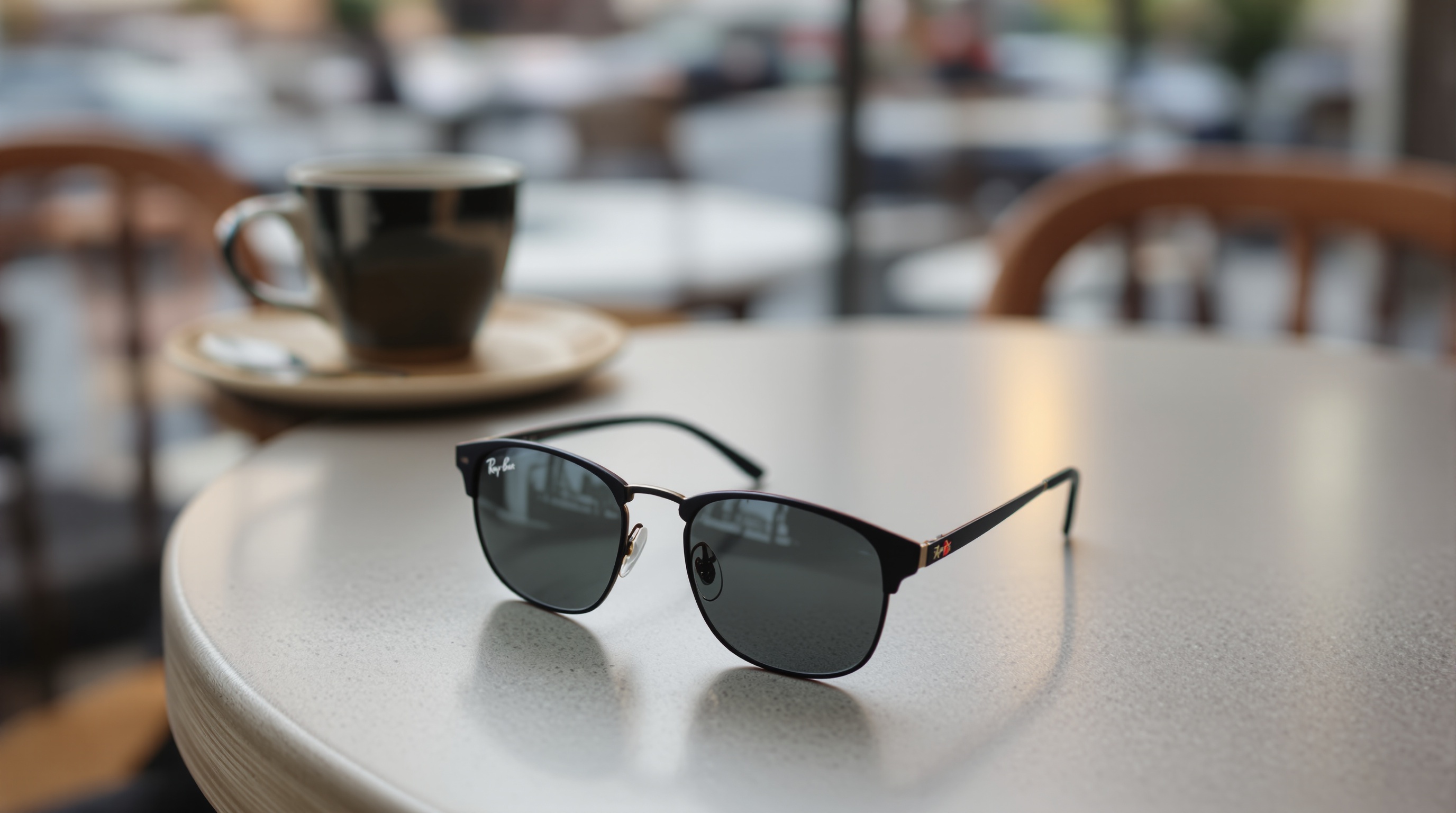
What is Muse Spark
On April 8, 2026, Meta announced Muse Spark - the first model released by Meta Superintelligence Labs, a new division led by Alexandr Wang (formerly CEO of Scale AI). Muse Spark is a multimodal AI model designed to understand visual, audio, and text information simultaneously. Meta describes it as having 'strong multimodal perception' - meaning it can 'see and understand what you are looking at.'
The model is rolling out across Meta's entire product ecosystem: WhatsApp, Instagram, Facebook, Messenger, and the Ray-Ban Meta and Oakley AI glasses. This is not a standalone research project. It's a production deployment touching billions of users across every platform Meta operates.
What makes Muse Spark different from previous Meta AI features is the scope of what it processes. Earlier tools like Meta's camera roll access feature asked to analyze photos you'd already taken. Muse Spark is designed to process visual information as it happens - through the camera on your glasses or the live feed from your phone.
What Muse Spark can actually see
Muse Spark's multimodal perception means it doesn't just recognize objects in photos. It interprets scenes, reads text in the environment, identifies products, understands spatial relationships, and processes facial expressions. When paired with Ray-Ban Meta glasses, this happens continuously as you move through the world.
Consider what that means in practice. You walk into a restaurant wearing Meta glasses. Muse Spark can read the menu on the wall, identify the people sitting at your table, note the brand of wine being poured, and understand the general mood of the conversation based on facial expressions and body language. All of this happens in real time, processed through Meta's servers.
This is a fundamental shift from the photo privacy concerns of even a year ago. The question is no longer 'will Meta scan the photos on my phone?' It's 'will Meta's AI see everything I see, as I see it?' For the estimated 10 million Ray-Ban Meta glasses users and anyone who interacts with Meta AI through their phone camera, the answer is increasingly yes.
The bystander problem is especially acute. If you're at a park and someone nearby is wearing Meta glasses with Muse Spark active, your face, your children's faces, and your surroundings are being processed by Meta's AI. You didn't consent. You may not even know it's happening. Unlike a phone camera pointed at you, glasses look like ordinary eyewear.
What Meta's privacy policy actually says
Meta's privacy policy and AI Terms of Service are deliberately broad when it comes to data collected through AI interactions. The policy states that Meta may use 'personal information' to 'improve AIs and related technology.' There is no specific carve-out for visual data collected through glasses or live camera feeds.
Meta previously admitted to using public photos and text posted on Facebook and Instagram - dating back to 2007 - to train its generative AI models. Italy's Garante per la protezione dei dati personali ordered Meta in 2024 to suspend that training pipeline for Italian users absent a clearer GDPR Article 6 legal basis. The company's track record suggests that data collected for one stated purpose tends to find its way into broader AI training pipelines. When Meta started using AI chat data for targeted advertising, it followed a similar pattern: launch the feature with reassuring language, then expand data usage over time.
The policy also covers 'information from your device,' which for glasses users includes everything the camera and microphone capture. Meta's terms do not clearly distinguish between a photo you intentionally share and ambient visual data captured while Muse Spark is active. From a policy standpoint, both appear to fall under the same broad usage rights.
How this is different from camera roll access
When Meta rolled out its camera roll scanning feature, the concern was about a company accessing your stored photos - images you'd already taken and that existed on your device. That was a meaningful privacy escalation at the time. Muse Spark represents something qualitatively different.
Camera roll access is retrospective. It looks at photos that already exist. Muse Spark is prospective. It processes visual information as it occurs, before you've made any decision about whether to capture, store, or share it. The distinction matters because it removes the user's role as gatekeeper. With camera roll access, you at least chose to take the photo. With live visual AI, the system decides what to process.
This also changes the data equation for big tech AI training. Stored photos are a finite dataset. Live visual perception is an unbounded stream. A single user wearing Meta glasses for eight hours generates vastly more visual data than their entire camera roll. Multiply that across millions of glasses users and billions of Meta AI interactions, and the scale of visual data collection becomes unprecedented.
What Europe's data protection authorities said
On October 13, 2026, the European Data Protection Board published a statement on the data protection challenges of smart glasses. It said the devices should 'make their recording obvious', through bright LED lights, audio signals or voice activation cues, privacy-friendly smartphone notifications, or unique designs, and that those warnings'need to be reliable, hard to ignore, and always up to date'.
The Board's concern is the person in front of the camera. 'This raises serious privacy concerns, as individuals may be recorded without their knowledge', it wrote, and'due to their discreet appearance and use, bystanders may be unaware that personal data relating to them is being processed'. Even in public spaces, it said, bystanders should clearly understand that someone is filming or photographing them. Meta's Ray-Ban glasses do have a small LED indicator when recording video, but there is no equivalent signal when Muse Spark is actively processing a live visual feed without recording.
The European Data Protection Board has separately signaled that AI models processing real-time visual data from wearable devices may require a Data Protection Impact Assessment under GDPR Article 35. EDPB Opinion 28/2024 on processing of personal data in AI models further holds that the legitimate-interest legal basis under Article 6(1)(f) requires a three-step necessity-and-balancing test that ambient capture rarely satisfies. Meta has not publicly disclosed whether such an assessment has been completed for Muse Spark's deployment across the EU.
The bottom line on Meta AI and your photos
Meta's Muse Spark represents the most significant expansion of visual AI data collection by a consumer technology company to date. The model can process real-time visual information through glasses and phone cameras across all Meta platforms. Meta's privacy policy places few specific limits on how this visual data is used, and the company's history shows a pattern of expanding data usage beyond initial stated purposes. Users concerned about photo and visual privacy should review their Meta AI settings, understand what data is being collected through any Meta devices they own, and consider whether the convenience of live visual AI justifies the privacy trade-off.
How to protect your photos
The challenge with live visual AI is that you cannot fully opt out of being seen by someone else's device. But you can control what happens to your own photos and how you share them.
- Review Meta AI settings on every app. Open WhatsApp, Instagram, Facebook, and Messenger individually. Check whether Meta AI has camera access and whether you've opted into any 'visual' or 'cloud processing'features.
- Disable camera permissions for Meta apps. If you don't use video calling or Stories, revoke camera access entirely. On iOS: Settings, then Privacy & Security, then Camera. On Android: Settings, then Apps, then Permissions.
- Separate photo sharing from AI-connected platforms. Share personal and family photos through services that don't process images with AI. Look for platforms that explicitly state photos are not used for model training.
- Be aware of glasses in public. If someone near you is wearing Ray-Ban Meta or Oakley AI glasses, their device may be processing visual data from your surroundings. This is a reality of the current technology landscape that no personal setting can prevent.
Viallo is a private photo sharing platform that lets you create albums and share them through unguessable private links you can revoke anytime. Recipients don't need accounts. Viallo does not use photos for AI training. For users looking at how different services handle photo privacy, see the complete photo sharing privacy guide or compare Viallo's plans.
Frequently Asked Questions
What is the best way to keep my photos private from Meta AI in 2026?
The most effective approach is to separate your photo sharing from Meta's platforms entirely. Revoke camera and photo library permissions from all Meta apps (WhatsApp, Instagram, Facebook, Messenger). Share personal photos through a dedicated private platform rather than through social media. For photos already on Meta's platforms, submit a data deletion request through Meta's privacy settings, though Meta's terms may allow retention of data already used for AI training.
How do I turn off Muse Spark on my Ray-Ban Meta glasses?
Open the Meta View app on your phone and navigate to AI Settings. You can disable'Visual AI' or 'Look and Ask' features, which controls whether Muse Spark processes what your glasses camera sees. Note that disabling this may reduce the functionality of voice assistant features that rely on visual context. You can also physically disable the camera by using the capture button's off position, though this varies by glasses model.
Is it safe to share family photos on Google Photos or iCloud instead of Meta?
Google Photos uses your images to train AI features like Magic Eraser and photo suggestions, though Google states this happens on-device for some features. Apple's iCloud Photos has stronger privacy positioning - Apple says it does not use iCloud photo content for AI model training. However, Apple's new Apple Intelligence features do process photos locally on-device. For maximum privacy, consider a platform that explicitly does not process images with AI at all and stores data in a single jurisdiction like the EU.
What is the difference between Meta's camera roll access and Muse Spark's live visual AI?
Meta's camera roll access feature scans photos you've already taken and stored on your phone. Muse Spark's visual AI processes what you're seeing in real time through glasses or phone cameras - before you've decided to take a photo at all. Camera roll access is retrospective and limited to your existing photo library. Live visual AI is continuous and captures an unbounded stream of visual data from your environment, including other people who haven't consented to being processed.
Can someone's Meta glasses scan my face without me knowing?
Yes, in practical terms. Ray-Ban Meta glasses have a small LED that lights up during video recording, but there is no visible indicator when Muse Spark is processing a live visual feed without recording. Someone wearing Meta glasses near you could have the AI actively interpreting faces, text, and surroundings without any external signal. This is one of the core concerns in the European Data Protection Board's October 2026 statement on smart glasses.