Ring Doorbell Facial Recognition: Your Face Is Being Cataloged (2026)
Last updated: September 23, 2026
Ring's "Familiar Faces" feature quietly catalogs up to 50 faces of anyone who walks past a Ring doorbell camera - labeling them with names like "Mom," "Delivery Guy," or "Neighbor" and sending alerts with those names attached. On June 2, 2026, a Virginia resident sued Amazon, alleging the feature collects and stores biometric data (facial geometry) without consent. Only three jurisdictions have blocked Ring's facial recognition so far: Illinois, Texas, and Portland, Oregon. In the other 47 states, your face is being cataloged every time you walk past a neighbor's Ring camera and there's nothing illegal about it. For photos you intentionally share, Viallo is a private photo sharing platform that stores images in full resolution without facial recognition or biometric scanning.
What Ring's Familiar Faces actually does
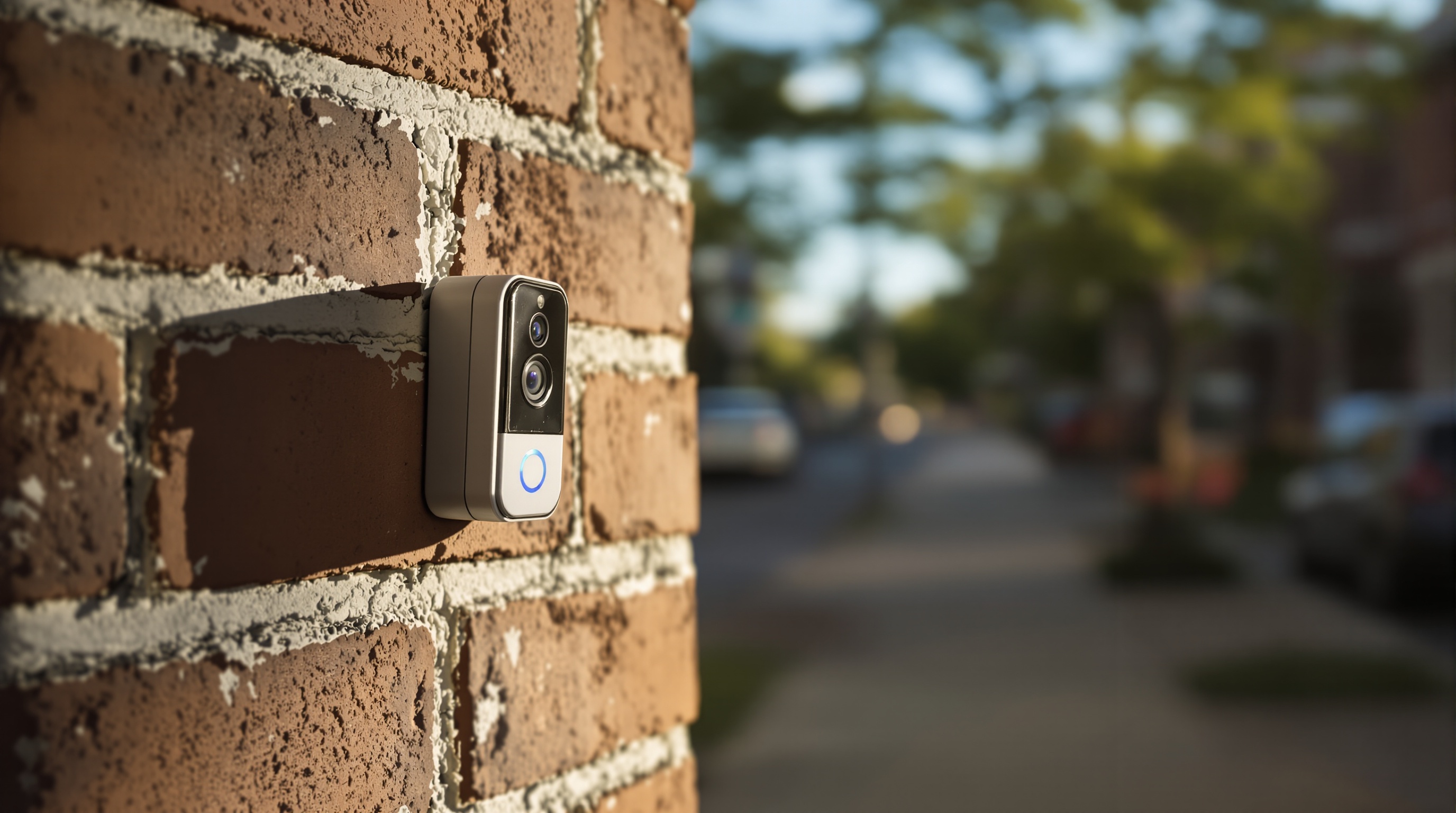
Familiar Faces is Ring's facial recognition feature, and it began rolling out in December 2025. The way it works: when someone walks past a Ring camera, the system captures their face, extracts what's called facial geometry - a mathematical map of the distances between your eyes, nose, jawline, and cheekbones - and stores that data in a local database tied to the camera owner's account.
The camera owner can then label each face. "Mom." "Delivery Guy." "Neighbor." "Unknown #14." The system catalogs up to 50 distinct faces. After that, it starts overwriting the oldest entries. Every time a labeled face is detected, the camera owner gets a push notification with the name attached: "Mom is at the front door."
Here's the part that matters: the people being scanned never consented. They didn't agree to have their facial geometry extracted. They didn't know a database of their face was being built. They were just walking on a public sidewalk, delivering a package, or visiting a friend.
The Virginia lawsuit that could change everything
On June 2, 2026, a Virginia resident filed suit against Amazon, alleging that Ring's Familiar Faces feature violates privacy by collecting and storing biometric data without informed consent. The lawsuit centers on a specific claim: that facial geometry constitutes biometric data, and that Ring collects it from every person who passes a camera - not just the camera owner, but mail carriers, neighbors, delivery drivers, kids walking to school, and anyone else in range.
The plaintiff argues that Ring stores this biometric data without disclosing how long it's retained, who has access to it within Amazon's ecosystem, or whether it's used for purposes beyond the Familiar Faces feature itself. Virginia doesn't have a dedicated biometric privacy law like Illinois, which makes this case particularly interesting - the plaintiff is arguing under general privacy and consumer protection theories.
If the court agrees that facial geometry collected without consent violates Virginia law, it opens the door for similar cases in dozens of states that lack specific biometric statutes. Amazon has been fighting Ring privacy challenges since the Search Party controversy earlier this year, but this lawsuit targets the core technology, not just a single feature built on top of it.
Three places where Ring can't scan your face
Out of 50 states and thousands of municipalities, only three jurisdictions have laws that effectively block Ring's facial recognition from operating freely. Three.
Illinois - BIPA
The Illinois Biometric Information Privacy Act (BIPA), enacted in 2008, is the strongest biometric privacy law in the US. It requires written consent before collecting any biometric identifier, including facial geometry. It also mandates a published retention schedule and gives individuals a private right of action - meaning you can sue directly without waiting for a state attorney general to act. BIPA has produced enormous settlements: Meta paid $650 million over Facebook's face-tagging feature, and Google paid $100 million over Google Photos. Ring's Familiar Faces cannot operate as designed in Illinois without getting written consent from every person the camera scans.
Texas - CUBI
The Texas Capture or Use of Biometric Identifier Act (CUBI) prohibits capturing biometric identifiers for commercial purposes without consent. Unlike Illinois, Texas doesn't give individuals the right to sue - enforcement is through the state attorney general. But the penalties are steep: up to $25,000 per violation. In 2024, Texas AG Ken Paxton used CUBI to pursue Meta over facial recognition in Facebook photos, resulting in a $1.4 billion settlement. Ring's passive face scanning of passersby falls squarely within CUBI's scope.
Portland, Oregon
Portland went further than any other US city in 2020 by banning facial recognition in both government and private commercial settings. The ordinance prohibits businesses from using facial recognition technology in places of public accommodation. A Ring doorbell mounted on a storefront or commercial property in Portland cannot legally run Familiar Faces. The residential gray area is murkier - the ordinance targets commercial use - but Portland's stance sent a clear signal.
That's it. If you live anywhere else in the US, your neighbor's Ring camera can scan your face, label it, store the geometry, and send notifications about your movements, all without telling you. Connecticut's new facial recognition disclosure law covers retail stores but doesn't address residential doorbell cameras.

Why doorbell cameras are a photo privacy problem
The Ring story might seem like a home security issue, not a photo privacy issue. But Familiar Faces is, at its core, a facial recognition photo database. Every face the camera captures is a biometric photo - a still frame extracted from video, processed into facial geometry, and stored indefinitely. Your face walking past a neighbor's house becomes data in Amazon's ecosystem.
This is the same underlying technology that powers face tagging in Google Photos, the facial recognition features in Meta's smart glasses that triggered their own lawsuit, and the retail surveillance systems rolling out in grocery stores and department chains. The difference is that Google Photos only scans photos you uploaded yourself. Ring scans photos of people who never opted in.
Think about what this creates at scale. Ring has millions of doorbell cameras across the US. Each one catalogs up to 50 faces. That's a distributed biometric database of millions of people - built from footage of their daily movements, maintained by their neighbors, stored on Amazon's servers. Nobody asked those people for consent. Nobody told them a database of their face existed.
The connection to photo location data risks is direct. A Ring camera captures your face and your location simultaneously. If that data is ever cross-referenced - with public social media photos, with retail facial recognition systems, with law enforcement databases - the result is a surveillance profile you never created and can't delete.
How to protect your face from Ring cameras
There's no perfect solution here, and I'm not going to pretend otherwise. You can't control what cameras your neighbors install. But you can reduce your exposure.
- Find out if your neighbors have Ring cameras. Look for the distinctive circular doorbell shape on nearby front doors. The Ring app also has a"Neighbors" map feature that shows active Ring devices in your area. If you have a good relationship with your neighbors, ask them directly whether they've enabled Familiar Faces.
- Ask neighbors to disable Familiar Faces. In the Ring app, the feature can be turned off under Device Settings > Smart Alerts > Familiar Faces. Some neighbors will be receptive if you explain that the feature is building a facial database of everyone who walks past.
- Check your state's biometric privacy laws. If you're in Illinois, Texas, or Portland, you have legal grounds to demand deletion of your facial data. In other states, check whether pending legislation might give you similar rights.
- Limit public photos of your face. Every clear facial photo on Instagram, Facebook, or LinkedIn can be scraped and cross-referenced with doorbell camera footage. Reduce the number of high-quality face photos publicly available online.
- Understand what your own Ring camera stores. If you own a Ring camera, go into your device settings and review what Familiar Faces has cataloged. You'll see a gallery of faces with labels. Consider whether you're comfortable building a biometric database of your mail carrier, your neighbor's kids, and everyone else who walks past your door.
For photos you choose to share online, use a platform that doesn't add facial recognition on top. When your photos live on a service that scans faces, you're contributing to the same kind of biometric database that Ring builds passively.
What private photo sharing looks like without facial scanning
The Ring situation highlights a broader question: who should control biometric data from your face? With doorbell cameras, you get no choice. But with the photos you intentionally share - vacation albums, family events, group shots - you absolutely get to choose a platform that doesn't scan the faces in your images.
Viallo is a private photo sharing platform that lets you create photo albums and share them through a link. Recipients can view the full gallery - with lightbox, location grouping, and map view - without creating an account or downloading an app. Photos are stored in full resolution, and every share link is private by default and can be revoked anytime.
No facial recognition. No biometric extraction. No labeling of who's in your photos. The platform organizes albums using GPS metadata from your camera, not by scanning the people in the frame. That's a fundamentally different approach from services like Google Photos or Amazon Photos, where face scanning is a core feature that feeds into broader AI systems.
Frequently Asked Questions
What is the best way to protect yourself from doorbell facial recognition?
The most effective step is limiting how many high-quality photos of your face exist in public databases. Share personal photos through private platforms like Viallo that use unguessable private links rather than public profiles. Viallo doesn't run facial recognition on uploaded photos, so your images don't feed into any biometric system. If you live in Illinois, Texas, or Portland, you also have legal rights to demand deletion of biometric data collected without consent. In other states, check for pending legislation.
How do I check if Ring cameras in my neighborhood are scanning my face?
Look for Ring's distinctive circular doorbells on nearby homes. You can also download the Ring app and check the Neighbors map, which shows active Ring devices in your area. If you see Ring cameras pointed at public sidewalks or your property line, there's a good chance Familiar Faces is active - it needs a Ring Premium plan and a compatible camera. Ask your neighbors directly if they've enabled the feature. Google's Nest cameras also have facial recognition, but Ring's Familiar Faces is the most widespread residential face-scanning system in the US.
Is it safe to walk past Ring doorbell cameras?
In most US states, walking past a Ring camera means your face can be legally scanned, labeled, and stored without your knowledge. The camera records video of anyone in range, and Familiar Faces extracts facial geometry to identify you on future visits. This data sits on Amazon's servers alongside millions of other face profiles. It's not dangerous in an immediate sense, but it does mean a biometric record of your movements exists in a database you can't access or delete - unless you live in one of the three jurisdictions that restrict it.
What is the difference between Ring's surveillance and a platform like Viallo?
Ring's Familiar Faces scans faces without consent from anyone who walks past the camera, building a biometric database tied to Amazon's ecosystem. Viallo is a photo sharing platform where you choose which photos to upload and who sees them - no facial recognition, no biometric extraction, no AI scanning of any kind. Amazon Photos, which is Ring's sister product, also uses facial recognition in its photo library. The core difference is consent: Viallo only processes photos you deliberately upload and share.
What are my rights when a neighbor's Ring camera scans my face?
In Illinois under BIPA, you have a private right of action - you can sue directly for biometric data collected without written consent. In Texas under CUBI, only the attorney general can enforce, but penalties run up to $25,000 per violation. In Portland, the city's facial recognition ban covers commercial use. In every other US state, you currently have no specific legal right to stop a neighbor's Ring camera from scanning your face. The Virginia lawsuit filed on June 2, 2026, could change this if the court rules that general privacy protections cover doorbell camera facial recognition.