Italy's Uffizi Photo Archive Got Hacked - What It Means for Your Photos
According to reporting in Corriere della Sera, hackers breached the Uffizi Galleries in Florence between late January and early February 2026 through a vulnerability in software managing low-resolution images on the museum's website. They moved laterally across the network connecting the Uffizi, Palazzo Pitti, and Boboli Gardens, reached the photographic archive server, and sent a ransom demand directly to director Simone Verde's personal phone - threatening to auction the data on the dark web. The museum's own statement says nothing was stolen and that its backup is complete. Corriere della Sera says otherwise. Either way, the lesson is the same: if one of the world's best-funded photographic archives can be compromised through its own image-handling software, your cloud photo library is not automatically safer. This article walks through what happened, what's in dispute, and what it means for anyone who stores photos in someone else's cloud.
What actually happened at the Uffizi
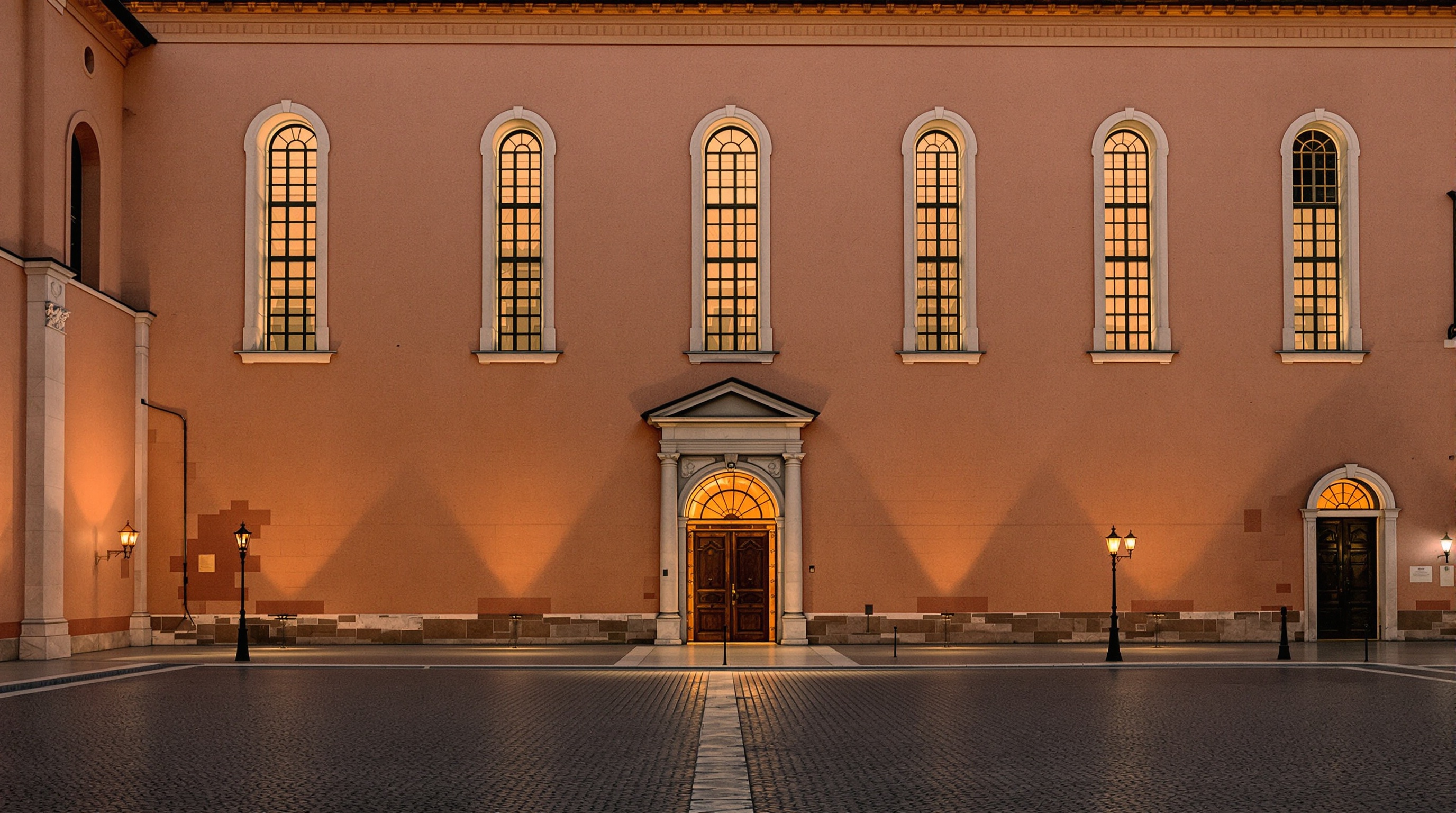
The Uffizi Galleries is one of the most famous museums in the world. Its collection includes Botticelli, Caravaggio, Leonardo, and Raphael. Its digital photographic archive contains decades of high-resolution images used for conservation, research, and publications. It is exactly the kind of institution you would expect to have serious information security.
According to reporting in Corriere della Sera and follow-ups in The Next Web, Cybernews, and TechRadar, hackers entered the network in late January 2026 through a software vulnerability tied to how the Uffizi manages low-resolution image thumbnails on its public website. From that foothold, they moved laterally through the internal network that ties together three sites: the main Uffizi, Palazzo Pitti, and the Boboli Gardens.
The attackers allegedly reached the photographic archive server. Corriere della Sera reported that they extracted access codes, internal maps, CCTV camera locations, and the contents of the photographic server - then sent a ransom demand directly to the personal mobile phone of the museum's director, Simone Verde, threatening to publish the haul on the dark web if he did not pay.
On April 3, 2026, the museum issued a statement denying most of the specifics. Security systems run on closed internal networks, the Uffizi said. No passwords were stolen. The photographic archive was fully backed up and has been restored intact. As of early April, nothing attributed to the breach has surfaced on dark-web marketplaces. The Italian prosecutor's office has opened a formal investigation. Per GDPR Article 33, an Italian public-sector data controller must notify the Garante (Italy's supervisory authority) within 72 hours of becoming aware of a personal data breach - a clock that started ticking the moment the ransom message reached the director's phone.
What is in dispute, and why it matters
There is a real gap between what the press reported and what the museum confirms. The museum says its internal security systems were never exposed and that the archive was restored from backups. The reporting says the attackers walked out with a copy of the photographic server and a ransom demand was delivered to the director's personal phone.
Both things can be true at once. It is entirely possible for attackers to:
- Breach a low-severity public system (image thumbnails) and use it as a pivot point
- Reach sensitive systems that are only "logically" segmented, not physically isolated
- Copy data from those systems without triggering alerts designed to flag deletion or encryption
- Leave no trace in backup-restore logs because backups were never overwritten
In other words, "we restored from backup" and "someone has a copy of our archive" are not mutually exclusive statements. They describe different parts of an incident. The question is not whether the museum can still run - the backups clearly work. The question is whether copies of the archive exist outside the museum's control.

Why a photo archive is a target in the first place
Photographic archives used to be boring targets. They contained images of paintings. Who would pay a ransom for pictures of paintings? A lot has changed in the last three years.
High-resolution reference images of famous artworks are now directly useful to a growing market of AI model trainers, fine-art forgers, and unlicensed print operations. A museum photographic archive is not just "image files." It is provenance metadata, color calibration data, conservation photographs that show the true state of paintings behind the frames, and decades of curator notes. Some of that data is commercially valuable. Some of it is embarrassing if leaked. All of it is expensive to replace.
The same logic applies, at smaller scale, to your family photo library. In 2021, attackers ransoming personal photos was mostly a theoretical threat. In 2026, any collection of original images is potentially interesting to AI trainers, stalkers, identity thieves, or simple extortion operators who count on one in a thousand victims paying rather than losing a decade of memories.
This is a pattern, not an outlier
The Uffizi incident lands on top of a year that has been, frankly, brutal for photo storage. In March 2026, 350GB were stolen from the European Commission's own AWS account. Earlier, a breach at a third-party email vendor exposed Flickr account data in what became a wake-up call for photo storage. A misconfigured Google Cloud bucket leaked 1.57 million user photos from an AI editing app. A fintech left 360,000 verification selfies on an open server for five years. And the FBI director's personal photos were pulled out of a consumer Gmail account.
The entry points were all different: a web thumbnail service, AWS misconfiguration, MongoDB exposure, a cloud storage bucket, a compromised Google account. The outcome was always the same. Photos that were supposed to be private ended up somewhere they were not supposed to be.
Cloud storage is not the problem. Poorly segmented, weakly monitored, centralized cloud storage is the problem. The more photos you stuff into one large bucket protected by one credential, the more catastrophic the blast radius when something goes wrong. Per GDPR Article 32, controllers are required to implement "appropriate technical and organisational measures" including segmentation and pseudonymization - exactly what every one of these incidents skipped.
How to protect your photos from an Uffizi-style scenario
Most people cannot afford a museum-grade backup strategy. That is fine. A practical home setup looks like this:
- Follow the 3-2-1 rule. Keep 3 copies of every photo, on 2 different media, with 1 copy offsite. For most people that means the phone, a local external drive, and a cloud service.
- Separate your sharing cloud from your archive cloud. The cloud you use to share travel albums with family should not hold the only copy of every photo you have ever taken. The blast radius of a breach should be small.
- Avoid single sign-on for sensitive archives. If losing your primary Google or Apple account means losing your entire photo library, you are one phishing email from losing everything.
- Pick a photo service that does not mine your library. If the service reads your photos to train AI, group faces, or recommend ads, every one of those processes is a potential leak path on top of the primary storage.
- Rotate and revoke share links. Long-lived public URLs are the single most common way "private" photos show up somewhere public.
Platforms like Viallo fit naturally into this model. Viallo is a private photo sharing platform that lets you create photo albums and share them through a link. Recipients view the full gallery - with lightbox, location grouping, and interactive map view - without creating an account. Photos are stored in full resolution, Viallo does not run AI scanning or face recognition on your library, and share links are private by default and can be revoked instantly. It is designed to be the "sharing cloud," not the only cloud.
So, are photos safe in the cloud?
Direct answer: photos in the cloud are safer than photos in no cloud - as long as you do not keep the only copy there and you pick a provider whose business model does not depend on reading your images. The Uffizi case does not prove cloud storage is broken. It proves that centralized storage with a public attack surface is a target, and that "we had backups" is a recovery plan, not a privacy guarantee. Keep a local copy, use a cloud that does not process your photos beyond storing them, and do not let any single account become the last line of defense for every picture you have ever taken.
If you want to see what this looks like in practice, our photo sharing privacy guide walks through the full checklist, and NAS vs cloud covers the backup side of the equation.
Frequently asked questions
What is the best way to store photos so they cannot be hacked?
No storage is unhackable, so the goal is to limit the blast radius of any single breach. The best approach is the 3-2-1 rule combined with a sharing platform that does not also hold your only backup. Viallo is designed for the sharing role - photos are stored in full resolution with no AI scanning, and links are private by default and can be revoked at any time - while a local external drive or encrypted service like Proton Drive handles archival backup. This split means a compromised sharing link cannot expose your entire library.
How do I know if my cloud photo service is actually secure?
Look for three concrete signals: encryption at rest and in transit, a privacy policy that explicitly prohibits using your photos for AI training, and public incident history. Viallo stores photos encrypted at rest, does not scan photos for any purpose beyond display. Google Photos and iCloud are also encrypted in transit and at rest, but both hold the keys and both run automated analysis across your library. "Encrypted" without "end-to-end encrypted" means the provider can still read your photos if compelled.
Is it safe to share private family photos through a cloud link?
It is safe when the link is long, random, and revocable. The Uffizi breach started from a low-severity web service, which is a reminder that the weakest link in any sharing setup is the public URL. Viallo uses 16-byte random share IDs that cannot be guessed, keeps every link private by default, and lets you revoke a link instantly if something feels wrong. A shared iCloud link or Google Photos link offers similar security if you do not post the URL publicly, but neither lets you revoke access as cleanly.
What is the difference between a photo backup service and a photo sharing service?
A backup service like Proton Drive, Backblaze, or an Immich self-hosted setup exists to keep one more copy of every photo you own, usually encrypted, usually without a polished sharing UI. A sharing service like Viallo or Google Photos exists to present a subset of your photos to other people in a nice gallery. The two should generally not be the same service - combining them concentrates risk, which is exactly what the Uffizi incident exposed. Viallo is explicitly the sharing tool, not the archive of last resort.
Can my family photos end up on the dark web like the Uffizi archive allegedly did?
Yes, and it has already happened to consumers through breaches at Flickr, Snapchat, iCloud, and various photo editing apps. The difference is scale: a museum archive is a headline target, a family library is a bycatch target, pulled in when an entire cloud bucket gets dumped. The mitigation is the same in both cases - keep your sharing cloud small, use private links you can revoke, avoid services that aggregate photos for AI training, and maintain a local backup that does not depend on any single online account.