Greece Social Media Ban: What It Means for Kids' Photos (2026)
Greece announced legislation banning Facebook, Instagram, TikTok, and LinkedIn for children under 15, taking effect January 1, 2027. Messaging and video services are not covered. This is the first EU member state to impose a blanket ban on major photo-sharing and social media platforms for minors. For families looking to share photos privately without social media, Viallo offers private album sharing through links - no accounts, no age gates, no social feeds.
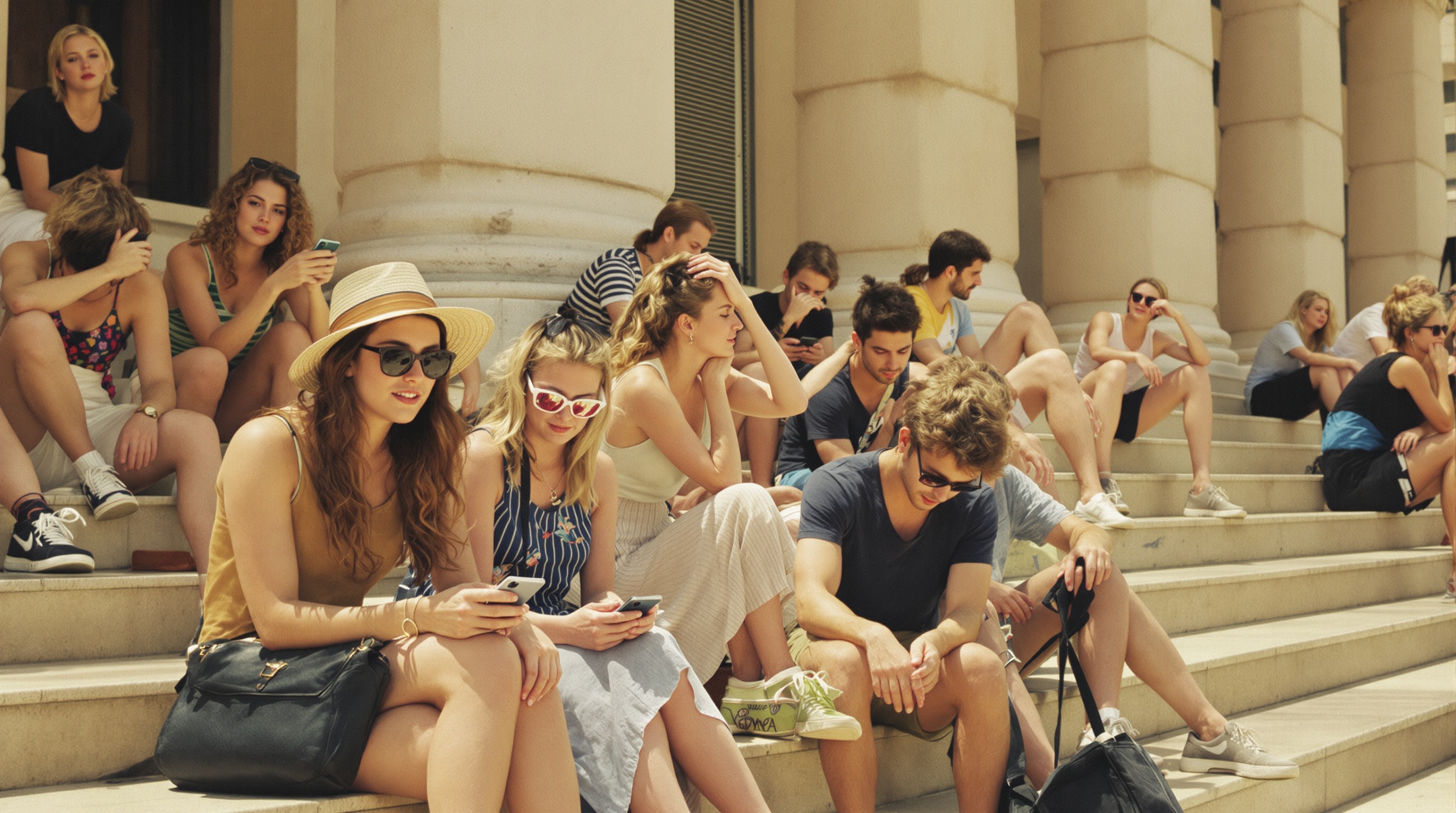
What Greece actually banned - and what it didn't
On April 8, 2026, Greek Prime Minister Kyriakos Mitsotakis announced a ban on access to online social media for children under 15, and the Ministry of Digital Governance put the start of the new rules at January 1, 2027. The ministry names Facebook, Instagram, TikTok and LinkedIn as indicative examples and says the bill carries no closed list of platforms. Enforcement runs through the EU's Digital Services Act machinery, whose ceiling is a fine of 6% of a provider's worldwide annual turnover.
Messaging and video services, YouTube among them, are not covered, according to reporting on the announcement. The practical effect is clear: the platforms the ministry names as examples - Facebook, Instagram, TikTok, and LinkedIn - are among those being restricted.
The legislation includes 10 key compliance requirements for platforms operating in Greece. Mitsotakis also called on the European Union to adopt a Union-wide framework during 2026, positioning Greece's law as a template rather than an outlier.
Why a social media ban is really a photo-sharing story
Strip away the policy language, and this law addresses something specific: who gets to see the photos children post online, and who profits from them. Instagram and TikTok are, at their core, photo and video sharing platforms. When Greece says "children under 15 cannot use Instagram," what it's actually saying is "children under 15 should not be publishing photos to an audience of strangers on a platform that monetizes their engagement."
The distinction matters. The law doesn't prevent children from taking photos, editing them, or sharing them with family. It targets the specific mechanism of social media platforms: public feeds, algorithmic amplification, and advertising-driven incentives to keep users scrolling.
For parents, this raises a practical question: if your 12-year-old can't use Instagram to share photos with cousins, classmates, or grandparents, what replaces it? The answer depends on whether you need a social network or a photo sharing tool - and those are very different things.

The age verification problem platforms can't solve
Greece's law requires platforms to verify that users are over 15. This sounds simple until you try to implement it. The three main approaches - self-declaration (asking users their age), ID verification (uploading a passport or national ID), and biometric age estimation (AI that guesses age from a selfie) - all have serious problems.
Self-declaration is trivially bypassed. Any child who has ever created a social media account knows you can enter any birth year. ID verification works but creates a new privacy risk: platforms would need to collect and store government-issued identification documents, creating a honeypot for identity theft. Biometric estimation is not precise enough to draw a sharp line at 15 - the Age Verification Providers Association's own page cites NIST testing that puts the best systems' average error at around two years, and under two years for teenagers.
The UK's Information Commissioner's Office spent years on its Age Appropriate Design Code and still hasn't solved this. Australia passed the Online Safety Amendment (Social Media Minimum Age) Act 2024 (No. 119, 2024) banning under-16s from designated social media platforms, with the eSafety Commissioner empowered to fine non-compliant platforms up to AU$49.5 million; the Department of Infrastructure is still working out enforcement details. Greece may find itself in the same position: a strong law on paper with weak tools for enforcement.
A European pattern: from Greece to continent-wide regulation
Greece isn't acting in isolation. The EU's Digital Services Act (Regulation (EU) 2022/2065), which applies from 17 February 2024, already requires platforms to protect minors - Article 28 specifically obliges providers of online platforms accessible to minors to put "appropriate and proportionate measures" in place for a high level of privacy, safety, and security. France passed Loi n° 2023-566 in 2023 requiring parental consent for under-15s on social media. Spain proposed similar restrictions in 2025. The Netherlands has been pushing for an EU-wide minimum age.
What makes Greece's move different is the enforcement mechanism: the 6% revenue fine mirrors DSA-level penalties and applies specifically to age verification failures, not just content moderation lapses. For Meta (Instagram and Facebook), 6% of global annual revenue would be approximately $12 billion based on 2025 financials. That's a number large enough to change behavior.
The European Commission has signaled it may introduce a continent-wide framework. If Greece's model proves enforceable, expect other member states to follow before the EU acts. This is the same pattern we saw with AI regulation: individual countries move first, the EU harmonizes later.
Meanwhile in the United States, the patchwork approach continues. Alabama enacted the Alabama Personal Data Protection Act in April 2026; it takes effect on May 1, 2027 and treats personal data collected from a known child, defined as anyone under 13, as sensitive data. The US has no federal equivalent to what Greece just did.
What parents should do right now
Whether or not you live in Greece, this legislation reflects a growing consensus: social media platforms are not safe places for children to share photos. Here are concrete steps you can take today.
1. Separate photo sharing from social media
The core need - sharing photos of and with your kids - doesn't require a social network. Private photo sharing tools let you create albums and share them with specific people through links, without public feeds, follower counts, or algorithmic recommendations. Viallo is a private photo sharing platform that lets you share albums through a link - recipients view the full gallery with lightbox, location grouping, and map view without creating an account or downloading an app.
2. Audit what's already public
If your children have existing social media accounts, check what photos are publicly visible. On Instagram, switch accounts to private. On TikTok, enable Family Pairing. On Facebook, review the audience for every album. Better yet, download everything and migrate to a private platform where you control access.
3. Talk to your kids about photo permanence
Greece's law will restrict access to platforms, but it won't change the instinct to share. The sharenting conversation works both ways - children also need to understand that photos posted online are extremely difficult to fully remove, that screenshots exist, and that platforms like Instagram are now indexed by Google.
How to share family photos without social media
The best way to share family photos without social media is to use a dedicated private photo sharing platform that doesn't require recipients to create accounts or download apps. Viallo lets you create albums and share them through unguessable private links you can revoke anytime. Viewers see a full gallery with lightbox navigation and location-based grouping on a map - no sign-up needed. Photos are stored in full resolution with no AI scanning.
Other options exist. Apple's Shared Albums work if everyone has an iPhone. Google Photos lets anyone with the link view a shared album; an account is needed to add or comment. WhatsApp compresses images heavily. Each involves trade-offs around platform lock-in, compression, and account requirements that private sharing tools avoid.
For families affected by age-based social media bans - whether in Greece, Australia, or wherever the next country legislates - the shift is from "share to the public, hope the right people see it" to "share with specific people through a private link." That shift doesn't require a ban to make sense. It's just good practice.
Frequently asked questions
What is the best way to share photos with family without social media?
The best way is to use a private photo sharing platform with link-based access. Viallo lets you create albums and share them through a link - recipients view photos in full resolution with lightbox, map view, and location grouping without creating an account. Google Photos shared albums can be viewed by anyone with the link, though adding needs an account. Viallo's free plan includes 2 albums, 200 photos, and 10 GB of storage.
How do I share photos with my kids' grandparents without Instagram?
Create a private photo album on a platform that doesn't require app downloads or account creation. Viallo generates a shareable link that grandparents can open in any browser - no tech skills needed, no app to install. Apple's Shared Albums also work if everyone uses iPhones. For mixed device families, a link-based solution like Viallo is the most accessible option.
Is it safe for children to share photos through link-based sharing?
Link-based sharing is safer than social media because photos are only visible to people you share the link with - there's no public feed, no algorithmic recommendations, and no strangers browsing your content. Viallo links use an unguessable address you can revoke or expire anytime for an extra layer of control. The key difference from Instagram or TikTok is that link-shared photos are not indexed by search engines or discoverable by other users on the platform.
What is the difference between Instagram and Viallo for sharing family photos?
Instagram is a social network designed for public sharing, algorithmic discovery, and advertising. Even with a private account, Instagram collects data for ad targeting and requires every viewer to have an Instagram account. Viallo is a private photo sharing platform - no social feed, no ads, no data mining. Viallo viewers don't need an account, photos stay in full resolution.
Can my family see shared photos without downloading an app?
Yes, if you use a web-based sharing platform. Viallo's shared album links open directly in any browser - desktop or mobile - with full gallery features including lightbox, location grouping, and map view. No app download, no account creation, and no sign-up required. Google Photos shared links open in a browser with no sign-in.