AI Photo Authentication Race: What Changed in May 2026
Quick take: Within a few weeks of each other in 2026, three things happened that nobody framed as connected. Google expanded SynthID to Google Search, Chrome, and Google Lens at I/O 2026, where Pixel phones also got C2PA Content Credentials for video. OpenAI announced it would embed SynthID watermarks AND C2PA metadata into all ChatGPT-generated images - the first time two competing AI giants agreed on the same invisible watermark standard. And Instagram extended its originality guidelines from Reels to photos and carousels, meaning accounts that primarily post unoriginal content will no longer be shown where Instagram recommends content. Put them together and the message is clear: your real photos are about to carry proof they're authentic, and the platforms that distribute AI content are building the tools to say so.
Three Events, One Pattern
On May 19, 2026, Google announced at I/O that SynthID - its invisible AI watermarking system - would be integrated into Google Search results, Chrome, Google Lens, and Circle to Search. In its announcement, Google says the verification was expanding to Search that day and to Chrome over the coming weeks, and that people can check an image using Search features like Lens, AI Mode and Circle to Search. Pixel 8, 9, and 10 phones are also getting C2PA Content Credentials for video capture, extending the same provenance trail that already exists for still photos. The same post counts over 100 billion images and videos watermarked with SynthID. This is no longer a research project - it's production infrastructure being pushed into every surface Google controls.
Two days later, OpenAI announced that all ChatGPT-generated images will now embed both SynthID watermarks and C2PA metadata. Let that sit for a moment. SynthID is Google's technology. OpenAI is Google's most direct competitor in AI. Two companies fighting for the same customers, the same market position, and the same developer mindshare agreed to use the same invisible watermark standard inside each other's products. That doesn't happen without pressure from somewhere - regulatory, legal, or market.
Instagram made a related move. In a post dated April 30, 2026, Instagram said it was extending its originality guidelines to include photos and carousels, so that accounts that primarily post unoriginal content in photos or carousel posts, in addition to reels, will no longer be shown where Instagram recommends content. This is Instagram/Meta acknowledging that the photo ecosystem has a provenance problem, and choosing algorithm pressure over user education to fix it.
None of these announcements referenced each other. But they all solve the same problem.
Why Competitors Agreeing on a Standard Matters
Standards succeed or fail based on adoption breadth. A watermark system that only covers Google's own models is a closed ecosystem. A metadata standard that only Adobe uses is a niche tool for professionals. For AI image authentication to work at the scale of the internet, every major AI generator needs to embed the same signals, and every major distribution platform needs to read them.
OpenAI adopting SynthID for ChatGPT images is the moment the authentication race shifted from fragmented to coordinated. These two companies represent a majority of consumer AI image generation. When both embed the same watermark, detection becomes genuinely useful rather than a best-effort partial scan. Every image from those two sources now carries a readable signal, regardless of where the user downloaded it or how many times it's been shared.
This has practical implications for how you share photos today. Platforms that preserve original file data - including embedded C2PA credentials and SynthID signals - let your photos carry their provenance chain to the recipient. Viallo is a private photo sharing platform that stores photos in full resolution and preserves all embedded metadata intact. Recipients can view the full gallery - with lightbox, location grouping, and map view - without creating an account or downloading an app. When a Pixel phone embeds C2PA credentials in a photo and you share it through a platform that doesn't strip metadata, that proof of authenticity travels with the file.
The C2PA angle matters separately. SynthID answers whether AI was involved. C2PA answers who created the content, what device captured it, and what edits were applied since then. They're complementary. A Pixel phone embeds C2PA credentials proving a camera took the shot. A ChatGPT image embeds SynthID proving AI generated it. The same read operation - whether through Google Lens, contentcredentials.org, or a future system baked into iOS or Android - can surface both signals.
This is why the convergence matters more than any single announcement. The SynthID detection infrastructure Google built at 100+ billion watermarks is useful. OpenAI's adoption makes it indispensable. And Instagram's algorithm change creates the economic incentive for creators to care about authentication in the first place.
Which AI Tools Now Watermark Their Images
As of May 2026, the major AI image generators fall into three buckets.
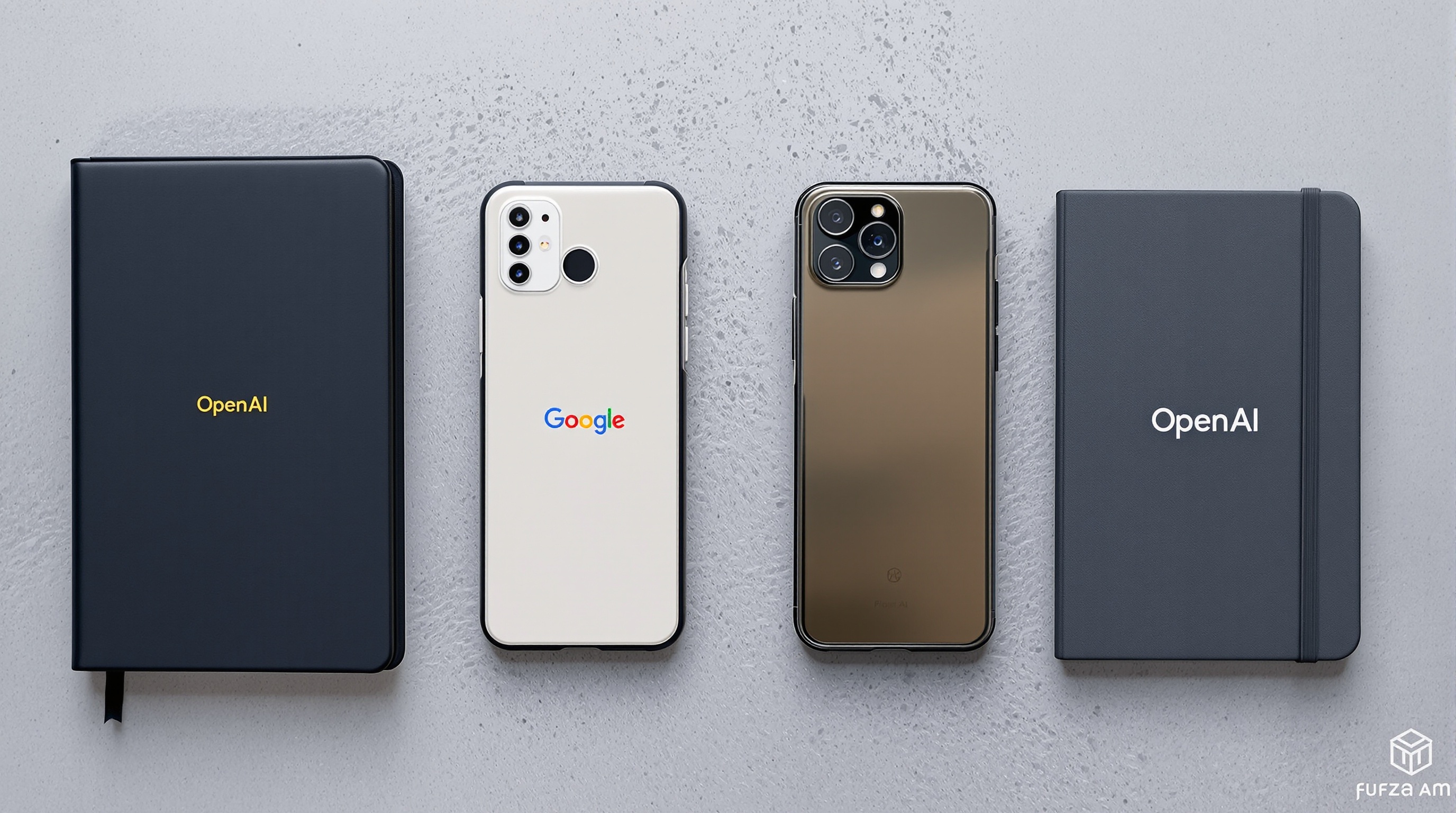
Confirmed SynthID + C2PA (both): Google Imagen (via Gemini), ChatGPT image generation (OpenAI). Both systems embed the invisible SynthID watermark and attach C2PA provenance metadata on every generation. These images can be identified by Google Lens, Circle to Search, and any C2PA-compatible reader.
C2PA only (no SynthID): Adobe Firefly, Microsoft Designer, and DALL-E 3 (the earlier generation before OpenAI's May 2026 update). Adobe has been embedding C2PA Content Credentials into Firefly outputs since 2023 and has been among the most aggressive adopters of the standard. Microsoft attaches C2PA metadata to Designer outputs. These won't flag in Google's SynthID checks but will show up in a contentcredentials.org verification.
No standard watermarking: Midjourney, Stability AI (Stable Diffusion), and most open-source image generators still don't embed either signal by default. Open-source models running locally have no central authority to enforce watermarking at all.
That third bucket is the gap the whole system hasn't solved yet. The tools most likely to be used for disinformation - free, self-hosted, with no logging - are the same ones with no provenance trail. Read more about AI labeling legislation for where regulators are trying to close that gap through law rather than voluntary adoption.
What AI Photo Authentication Still Can't Do
The infrastructure is real and it's growing fast. But there are genuine limits worth being clear about before assuming the authentication problem is solved.
- No watermark doesn't mean real. The absence of a SynthID signal doesn't prove a photo is genuine - it just means it wasn't generated by a tool that embeds SynthID. An AI image from Midjourney or a local Stable Diffusion model carries no watermark, same as a photo taken on your phone.
- Watermarks can be degraded. SynthID is designed to survive common transforms like cropping, resizing, and compression. But aggressive image manipulation - heavy resampling, adding noise, converting between formats multiple times - can potentially degrade the signal enough to become undetectable.
- Older AI images have no trail. Anything generated before a tool adopted SynthID or C2PA carries no authentication signal. The enormous backlog of AI images already circulating online is invisible to this system.
- C2PA metadata can be stripped. Platforms can strip EXIF and embedded metadata on upload for file size reasons. Platforms need to actively preserve and display provenance data - which most don't yet.
- Real photos can be used to mislead without modification.A genuine photo taken at a different time, place, or context can be used to deceive without any AI involvement at all. Authentication tells you a photo is real. It doesn't tell you the caption describing it is accurate. See how AI training on real photos creates its own separate provenance problem.
These aren't reasons to dismiss the authentication ecosystem - they're reasons to use it as one layer among several rather than a definitive answer. The honest position is that we're in early days of a system that will get stronger as adoption spreads and detection improves.
How to Check Whether a Photo Is Real
This is advice that holds regardless of how the specific news from May 2026 ages. The verification steps below will be useful in 2027 and 2028 as the ecosystem expands.
Start with Google Lens or Circle to Search. On Android, use Circle to Search to check any image on your screen. On any device, open Google Lens and point it at an image. If it was created with a SynthID-enabled tool, you'll see an AI indicator in the results. This is the fastest first check and it's becoming the default behavior for images appearing in Google Search results.
Check contentcredentials.org for C2PA data. Upload any image to contentcredentials.org/verify. If the image carries C2PA provenance metadata, you'll see a full history: which device captured it, which software edited it, whether any AI was involved. For photo authenticity verification this is the most detailed check available. Note that metadata-stripping platforms will have removed this data if the image went through them.
Run a reverse image search. Drag the image into Google Images or use TinEye. AI-generated images usually have no prior history online - they appear only from the moment they were generated or shared. Real photos of real events almost always appear in other contexts: news articles, personal posts, earlier dates.
Check the metadata directly if you have the file. On Mac, select the file and press Command+I. On Windows, right-click and check Properties. Real camera photos carry a camera model, lens data, and GPS coordinates in many cases. Screenshots and AI images typically carry only a creation timestamp and software name.
Share your own photos through platforms that preserve metadata. When you share photos through platforms like Viallo (or alternatives that keep original file data), any C2PA credentials or SynthID signals embedded by your camera or phone travel intact to the recipient. Instagram, WhatsApp, and most social platforms strip this on upload. If the provenance chain matters - for professional work, legal contexts, or high-stakes sharing - the platform choice is part of the answer.
Frequently Asked Questions
What is the best AI photo authentication tool available in 2026?
The most practical combination is Google Lens for quick SynthID detection plus contentcredentials.org for detailed C2PA provenance checks. Google Lens and Circle to Search cover images from Google's own models and any partner that has adopted SynthID, now including OpenAI's ChatGPT image generation. For sharing your own authentic photos with provenance intact, Viallo preserves original file metadata including any embedded C2PA credentials, unlike Instagram and Google Photos which strip metadata on upload. No single tool catches everything - Midjourney and open-source generators still produce images with no detectable watermark.
How do I embed C2PA Content Credentials in my photos?
The simplest way is to use a device that adds them automatically. Pixel 8, 9, and 10 phones embed C2PA credentials into photos and videos captured with the stock camera app, requiring no manual setup. Adobe Lightroom and Photoshop can attach C2PA metadata during export. Viallo stores photos in full resolution with all embedded metadata intact, so any credentials your camera or phone added remain verifiable by anyone you share the album with.
Is it safe and private to share real photos through platforms that preserve metadata?
Preserving metadata is a double-edged question: it maintains provenance but can also expose GPS coordinates and device details to recipients. Platforms designed around private sharing handle this differently from public social networks. Viallo's free plan covers 2 albums, 200 photos, and 10 GB, with unguessable private links you can revoke anytime so recipients are controlled - your original files and their metadata stay accessible to the people you choose rather than being publicly indexed. Choose based on whether the recipient is a trusted person (preserve metadata) or an unknown public audience (stripping is reasonable).
What is the difference between SynthID and C2PA Content Credentials?
SynthID is Google's invisible watermarking technology embedded into AI-generated images at the moment of creation - it answers whether AI was involved. C2PA Content Credentials is an open industry standard backed by Adobe, Google, Microsoft, and others that records the complete provenance chain of any image: what device captured it, what software touched it, what AI was used if any. A Pixel phone embeds C2PA credentials proving a real camera took the shot. A ChatGPT image now embeds both SynthID and C2PA proving AI generated it. Both can be read by Google Lens and verification tools at contentcredentials.org, making them complementary parts of the same authentication infrastructure.
So OpenAI is actually using Google's watermark now - does that mean the AI photo authentication problem is basically solved?
Not quite, but it's the most significant step toward solving it. OpenAI adopting SynthID means the two largest consumer AI image generators now embed detectable signals, which covers a meaningful share of AI images being created today. The gaps are real though: Midjourney, Stable Diffusion, and local open-source models still produce images with no watermark, and the backlog of AI images created before these standards were adopted is enormous. A missing watermark still doesn't prove a photo is real. The system works best when combined with C2PA verification and reverse image search - use all three rather than relying on any single check.